
The Year in Blu-Rays
We got THREE Laurel & Hardy releases this year!

There are many obvious reasons not to collect physical media in the year 2025. Blu-Rays are expensive, take up too much space, and the whole world has moved on to streaming anyway. But there are also some good reasons: your money supports the restoration of classic films, and you get a nice shelf (or many shelves) full of stuff you like out of the deal. Also, if you care about movies at all, you know that the streaming landscape is mostly terrible (oh goodie, Amazon Prime is presenting this movie with only “limited commercial interruptions”), and also that it’s hard to feel sentimental about an AVI file.
Now that DVDs and Blu-Rays are consumed only by Walmart bargain-bin shoppers or insane cinephile collectors, we’re in a physical media golden age. True, we’re long past that brief, miraculous window in the 2000s when the likes of Martin Scorsese and Robert Altman were forced to sit for audio commentaries, but on the other hand my last haul from Vinegar Syndrome included a collection of Hisayasu Satō films, Joe Dante’s The Movie Orgy, and an absurdly-packed 4K release of Behind the Green Door that was packaged as a slipcover within a slipcover within a slipcover!
And now, without further ado, the official Will Sloan’s Brilliant Thoughts Blu-Ray Release of the Year is…
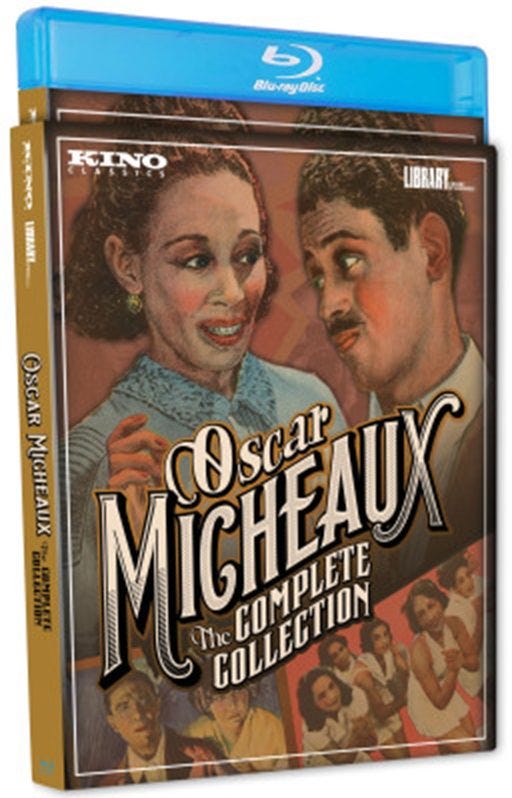
Oscar Micheaux: The Complete Collection (Kino)
Oscar Micheaux, the first great African American filmmaker, made around 40 films between 1919 and 1948, many of which he self-funded and self-distributed. Only 15 survive, including just three of his silent films. What we have—ranging from light entertainments like Swing! (1938) and Lying Lips (1939) to thorny, painful attempts to grapple with the Black experience like Within Our Gates (1920), Body and Soul (1925), and God’s Step Children (1938)—hint at the breadth of what we’ve lost. Despite his canonical status, Micheaux has been ill-served by home video; when I first heard about him when I was a teenager, the easiest way to come into contact with his work was ordering the hazy DVD-Rs of his sound films that Something Weird Video used to sell. Kino’s very welcome Pioneers of African-American Cinema collection of a decade ago included several of Micheaux’s best films alongside most of the other canonical “race movies.” Now, finally, is a collection of Micheaux’s entire battered and neglected surviving filmography, sourced from the best available elements—including one I’d never seen on video before, The Notorious Elinor Lee (1940). Micheaux is too rich and difficult a subject to encapsulate here, but suffice to say, exploring his life and career is like cracking open a secret closet in the big mansion of Film History and finding a whole other Hollywood.
Other fine releases…
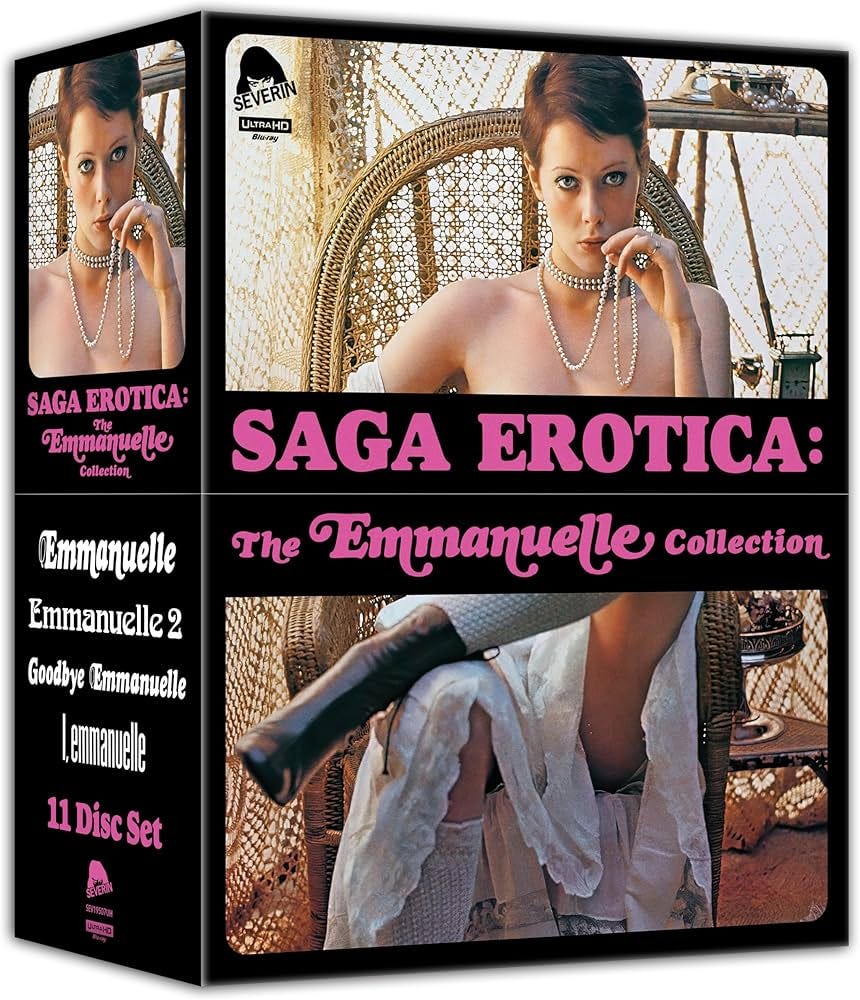
Saga Erotica: The Emmanuelle Collection (Severin)
I told myself I wasn’t going to get Severin’s 11-disc monument to the first three Emmanuelle films because I don’t really like these movies (give me Black Emanuelle any day). But of course I was lured by the many extras, including archival interviews with Sylvia Kristel, a great featurette by my pal Eric Veillette about the censorship that the 1974 original faced in Ontario, and insightful commentaries by the likes of Elizabeth Purchell, Gillian Wallace Horvat, and Veronica Fitzpatrick. Purchell wraps up her commentary for the first film by calling it flawed, complicated, sometimes deeply problematic, and also a masterpiece—a conclusion that resonated strongly with me, because if I’m sitting here listening to the commentary track for Emmanuelle (1974), I must agree.
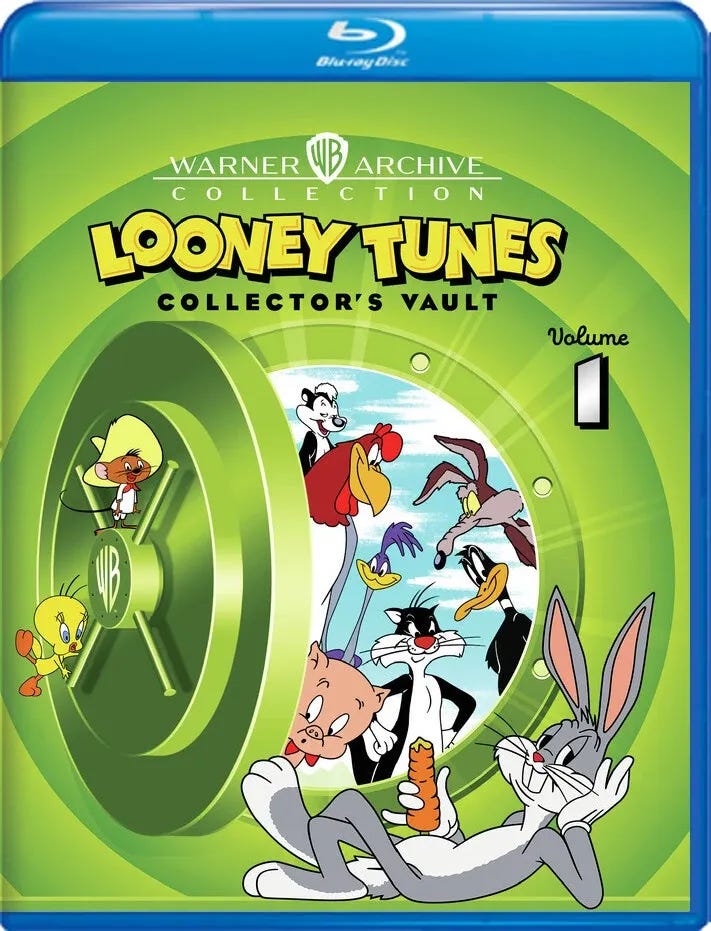
Looney Tunes Collector’s Vault Vol. 1 (Warner Archive)
How this new series of lesser-known Looney Tunes cartoons differs from the previous four-volume Looney Tunes Collector’s Choice series is a mystery to me, but regardless, this is another volume of lesser-known Looney Tunes and Merrie Melodies cartoons. The first disc is all new to home video, the second disc is new to Blu-Ray, and it’s just a big ol’ pile of cartoons from across 30 years of varying styles and quality. You’ll get a solid-gold classic like Rabbit Punch (1948), and then you’ll get a middling Friz Freleng Sylvester & Tweety cartoon, and then you’ll get a lushly-animated 1930s effort like Bars and Stripes Forever (1939) starring failed one-shot character “Warden Paws,” and then you’ll get a late-‘50s slot-filler with the Goofy Gophers or Henery Hawk or someone like that. The spirit of the enterprise is perfectly embodied by the slapdash Photoshopped cover. Can’t wait for volume two. Keep pouring cartoons on my plate, I’ll keep eating ‘em.
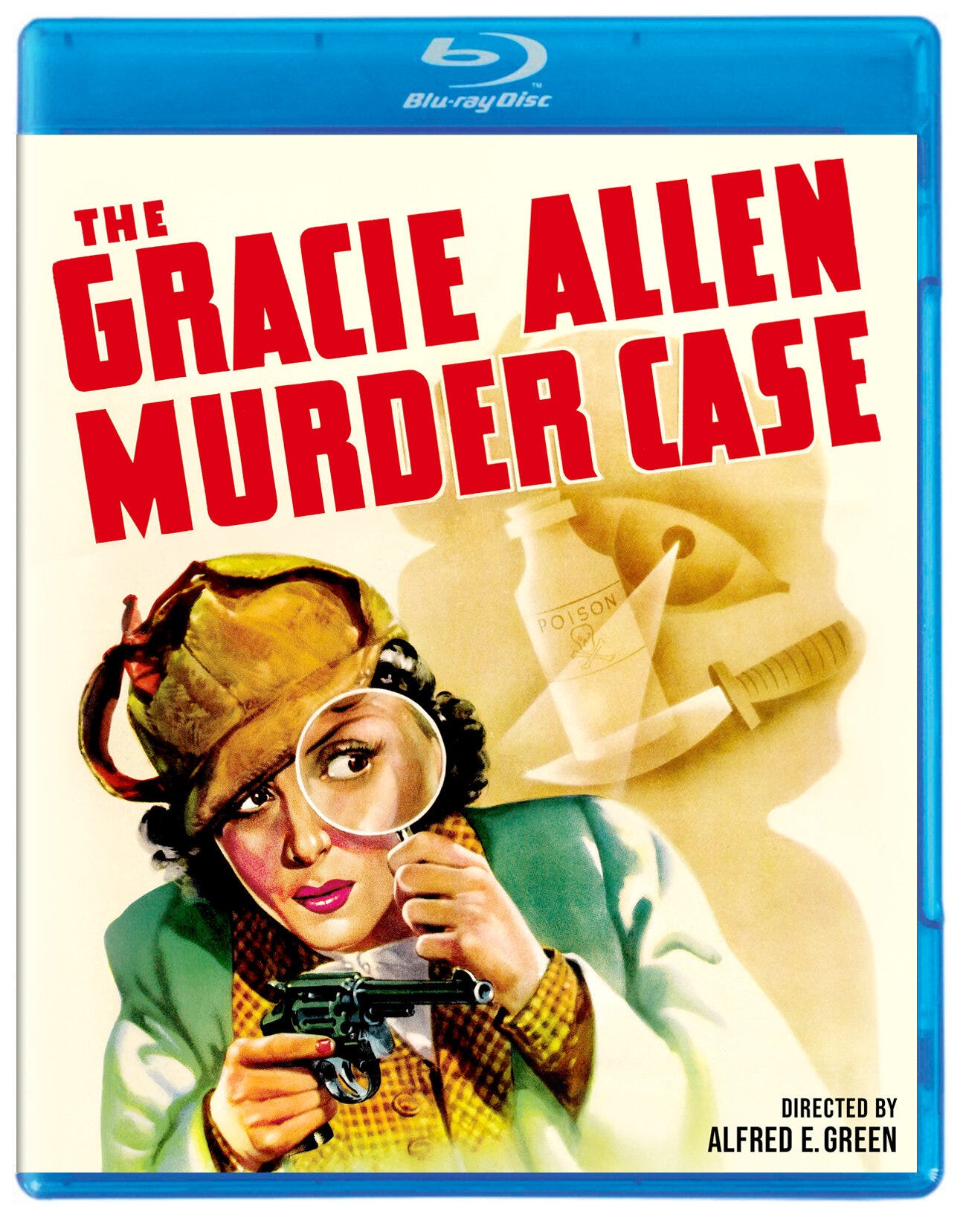
The Gracie Allen Murder Case (Kino)
A forgotten vehicle for the great but dangerously-close-to-forgotten radio comedian Gracie Allen (as “herself”) that pairs her with then-popular fictional detective Philo Vance (Warren William). This is one of those releases I felt personally obligated to buy because, when someone insisted there was an audience for it at the pitch meeting, they were talking about me. I saw this lighter-than-air comedy-mystery years ago on a fuzzy ok.ru stream and didn’t think much of it, but the crystal-clear Blu-Ray transfer reveals the effortlessly entertaining film that was hiding in plain sight, and highlights the nuances of Gracie’s incredible star performance. She should be as fondly remembered as Groucho.
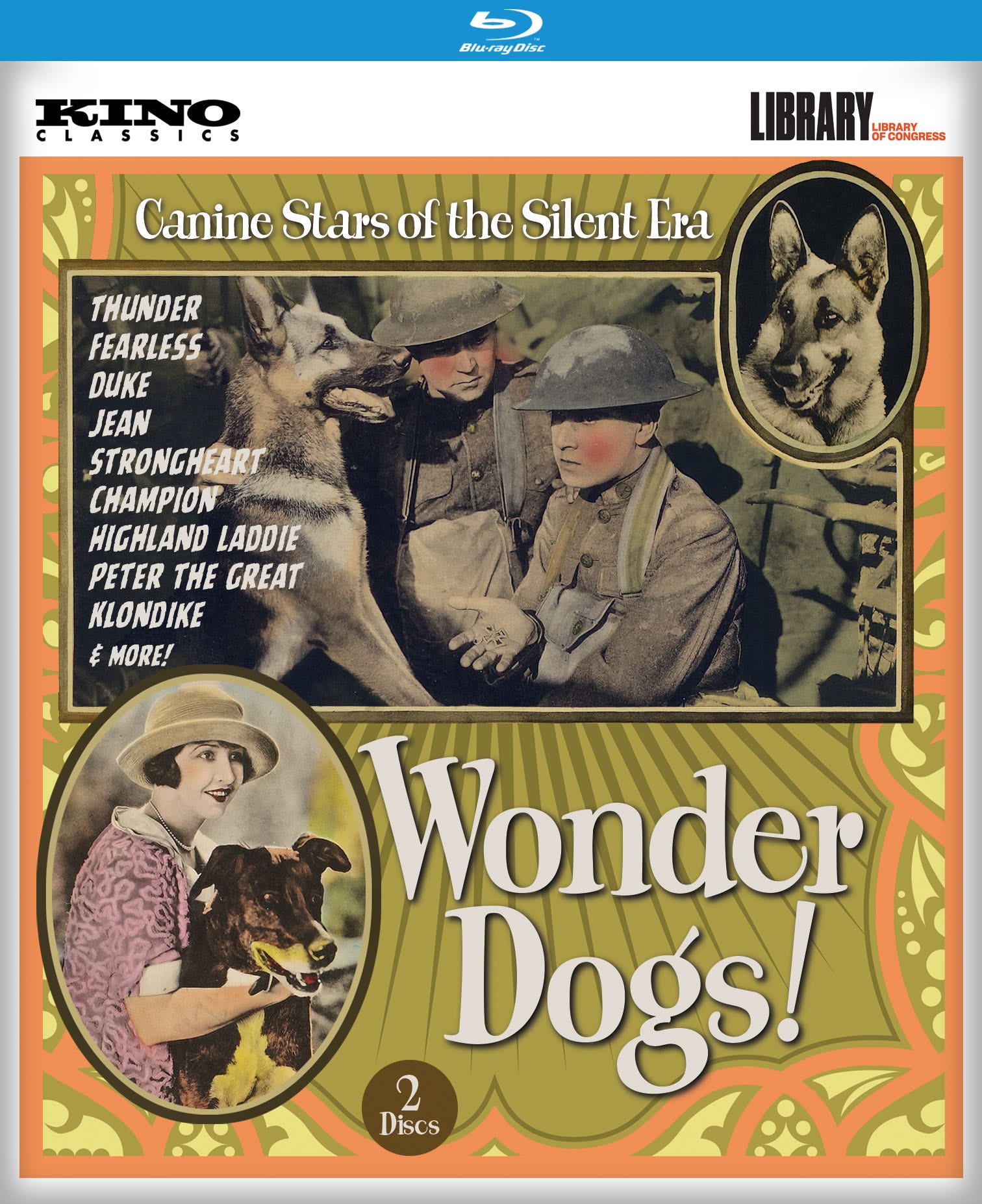
Wonder Dogs! Canine Stars of the Silent Era (Kino)
Kino is far and away by favourite Blu-Ray label right now, because no other company is so adventurous and casts such a wide net. One week they’ll put out Made in New Jersey: Films from For Lee, America’s First Film Town—an extraordinary collection that includes restored films by D.W. Griffith, Mack Sennett, and Edgar G. Ulmer—and another week they’ll release It’s Pat: The Movie. As a dog-lover, this ingenious collection of silent films featuring canines really spoke to me. I had a good time watching His Master’s Voice (1925), a World War I drama about a brave German Shepherd who saves his master on the French front, and I really loved a one-minute Edison Studios production called Dogs Playing in the Surf (1898), which does exactly what it says on the tin and almost moved me to tears. The lives of dogs are not typically canonized, so I felt fortunate to be able to see these good boys and girls from over 120 years ago having a nice time.
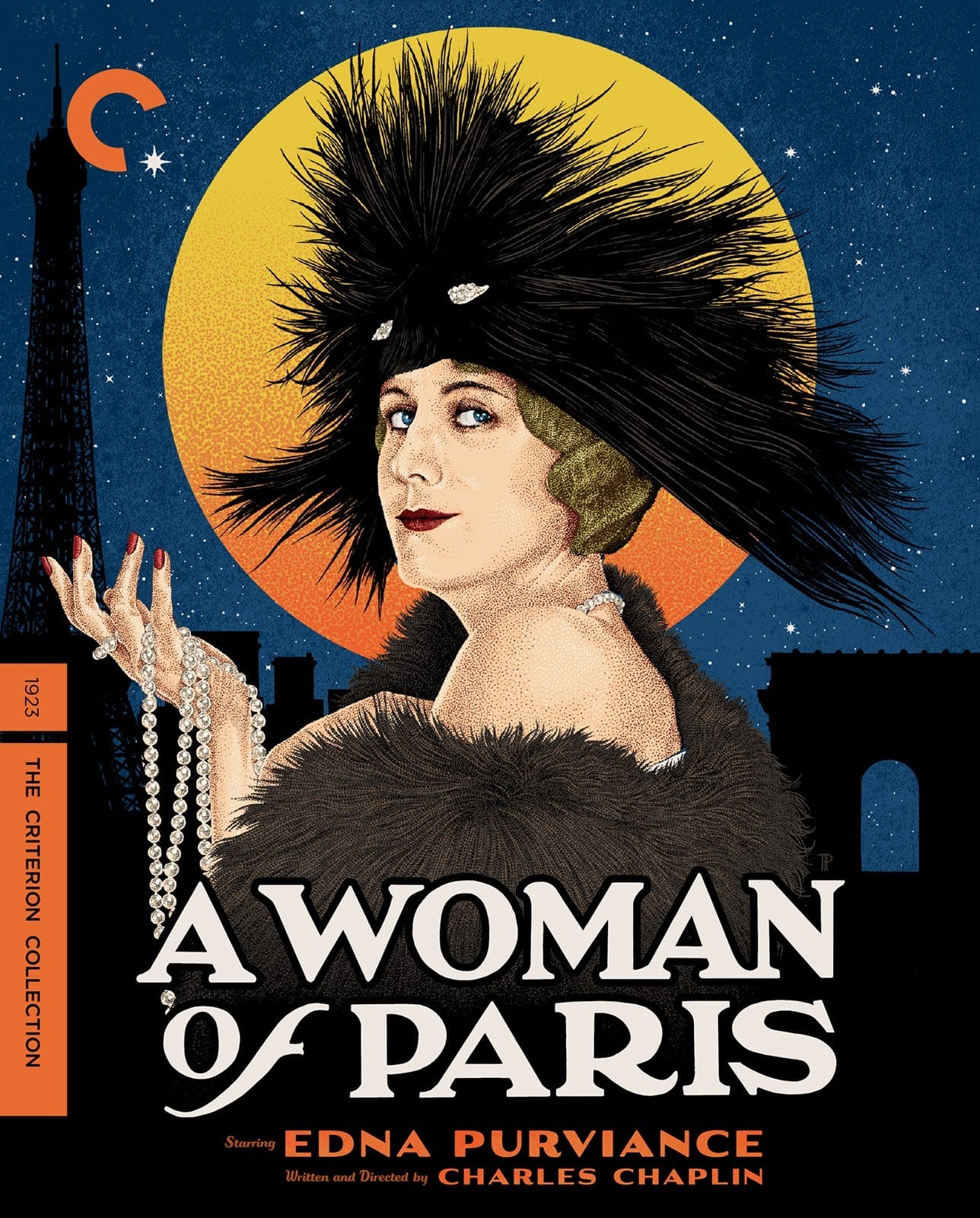
Charlie Chaplin’s 1923 excursion into high drama, in which he appears only in an unrecognizable bit role. The Interiors of its day. In his 1964 autobiography, Chaplin wrote that it was “a great success with discriminating audiences,” and many of his contemporaries, notably Ernst Lubitsch, were influenced by its naturalistic acting and subtle visual strategies (“Most people forget it now, but this was the first time suggestion was used on the screen to convey an idea,” wrote Buster Keaton in his own memoir). But unfortunately, A Woman of Paris was the least popular of Chaplin’s silent features, and remains something of a “for completists only” proposition. Watching it again, I was struck by how its story—about a working-class girl who rises from poverty through a whim of fate, but feels the past nipping at her feet—neatly fits with the rest of Chaplin’s art and life. Criterion’s release is a one-stop film school, with many old and new contextualizing extras including a visual essay by Jeffrey Vance that explains Chaplin’s innovations and details his eccentric, proto-Kubrickian working methods (he shot this in chronological order over the course of a full year, and could afford to do this because he owned the studio).
Christine Lucy Latimer: Fragile Systems (Black Zero)
I am in awe of Stephen Broomer’s Black Zero, a scrappy label that revives classic Canadian avant-garde and experimental cinema in fully tricked-out editions, often with ample participation from the filmmakers. His many remarkable discoveries prove just how much the experimental film canon was determined by whether Jonas Mekas could make it out to a screening back in the ‘60s. All Black Zero releases are worth getting, but I was especially taken with Christine Lucy Latimer’s films, which, emerging around the turn of the millennium, are concerned with the tactile quality of digital video, reveling in pixelation, glitches, warped colours, and the tension between old and new media when film is scanned.
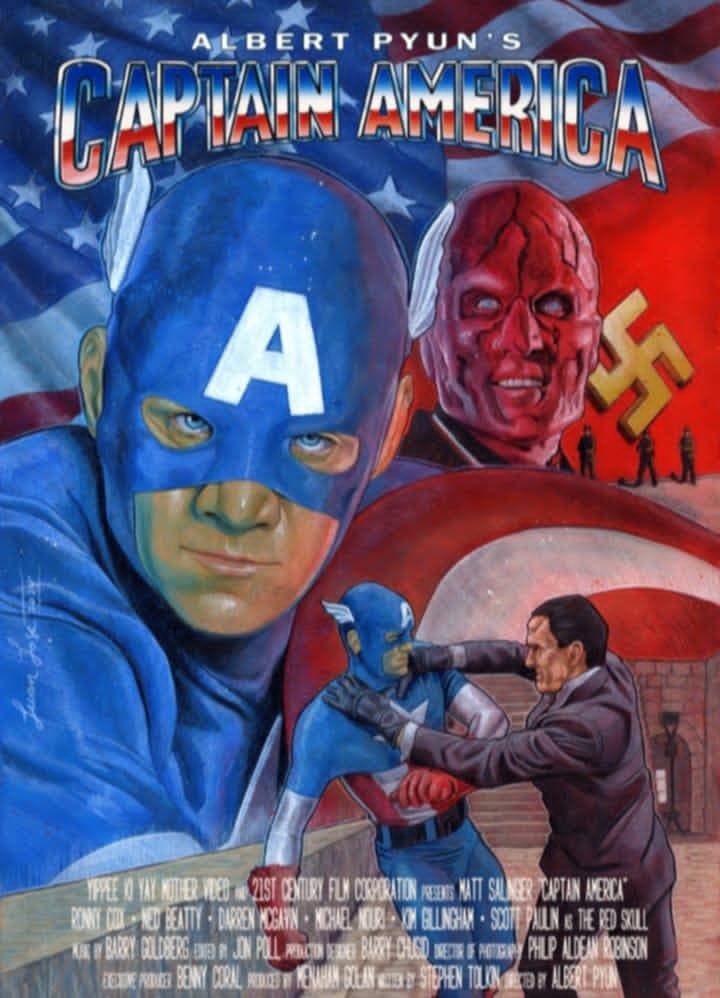
Albert Pyun’s Captain America (Yippee Ki-Yay Mother Video)
Albert Pyun’s former reputation as one of the worst directors of all time can be largely blamed on Captain America (1990), his brutally compromised superhero film that disappointed a lot of kids who rented it at Blockbuster. After 30 years, Pyun’s workprint has finally escaped containment via this handsomely-executed if legally-dubious release, which reveals a more coherent vision than the one that producer Menahem Golan allowed the world to see. The story is now told through a complicated flashback structure that plays with audience expectations, rather than the strictly linear chronology of the theatrical cut. Re-instated scenes add emotional texture to the Red Skull character, and we also get a surprising interlude where the Captain is reunited with an elderly colleague who rages against the military industrial complex. The pace is slower and the tone even more melancholy, doubling down on everything that ‘90s audiences hated about the theatrical cut and feeling identifiably like the work of the director of Crazy Six (1997).
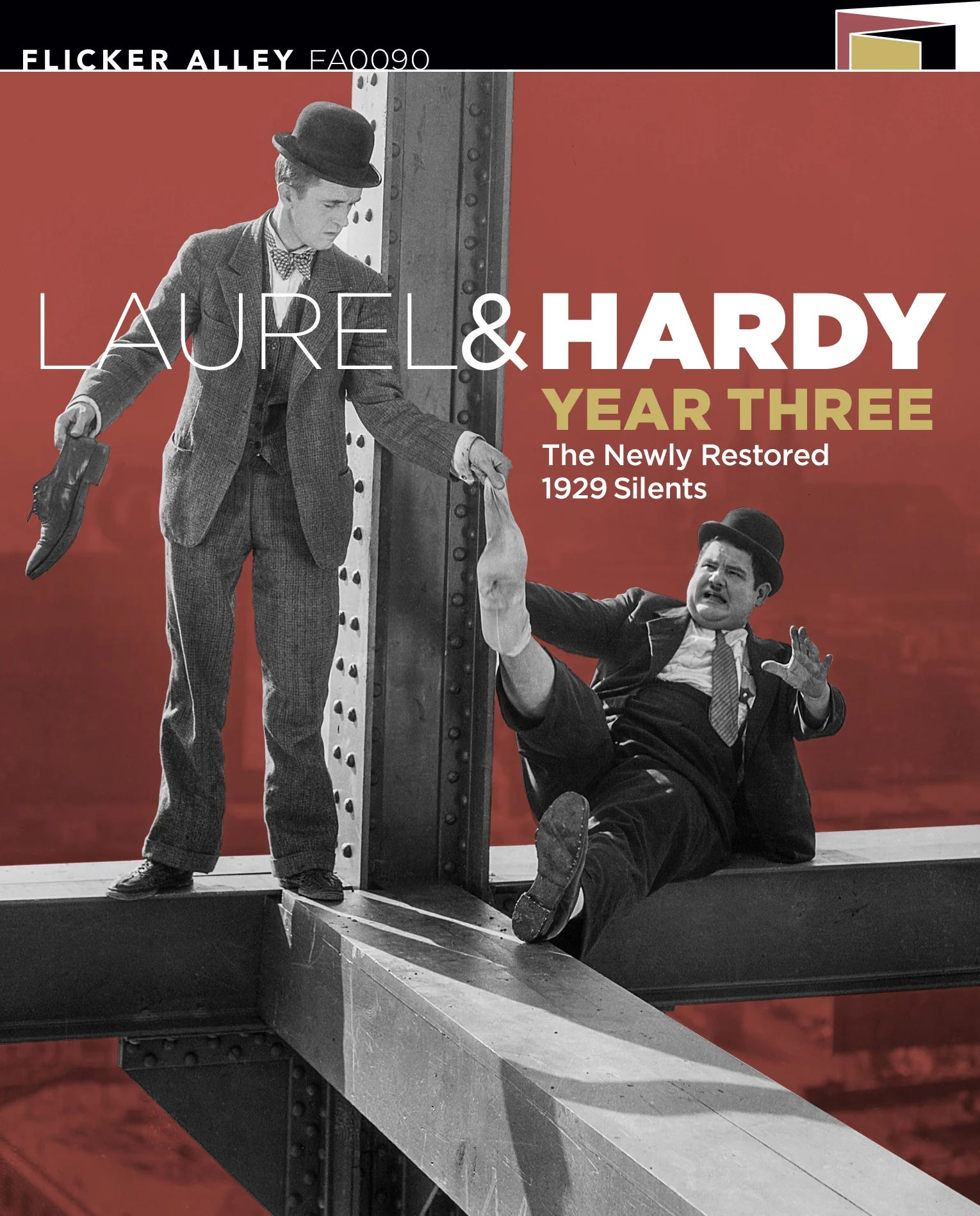
Laurel & Hardy: Year Three (Flicker Alley), Laurel & Hardy: The Definitive Restorations Volume 2 (Kit Parker Films), Laurel and Hardy: The Restored Features Volume 1 (ClassicFlix)
When I was growing up, the only Laurel & Hardy movies you could easily see were the public domain dynamic duo of The Flying Deuces and Atoll K haunting every bargain bin. How things have changed! This year brought no fewer than three beautifully-restored collections of the boys’ films in less than two months! I’ve been happier than a pig in shit gorging myself on cinema’s definitive fat-guy/skinny-guy comedy duo, feeling misty-eyed about these two sweet bozos who keep constantly hurting each other but can clearly never be apart. The short-film collections include representative samples of both their silent and sound output, including such world-historic laff-generators as Liberty (1929), Tit for Tat (1935), and funniest-movie-of-all-time contender Big Business (1929). The two Restored Features (Pardon Us and Pack Up Your Troubles) are uneven, and recommended for completists only— which, to be clear, should mean all of you.
Really enjoyed this homage to Rosenbaum's DVD/Blu-ray column in Cinemascope, even if it has far less references to falling-out friendships.
Not sure if you saw but someone on reddit claims to have contacted the Pyun estate to create another legally dubious blu ray following the fall out of Roy Damm becoming infamous